How to Build a Support Team for a Handcycle Expedition
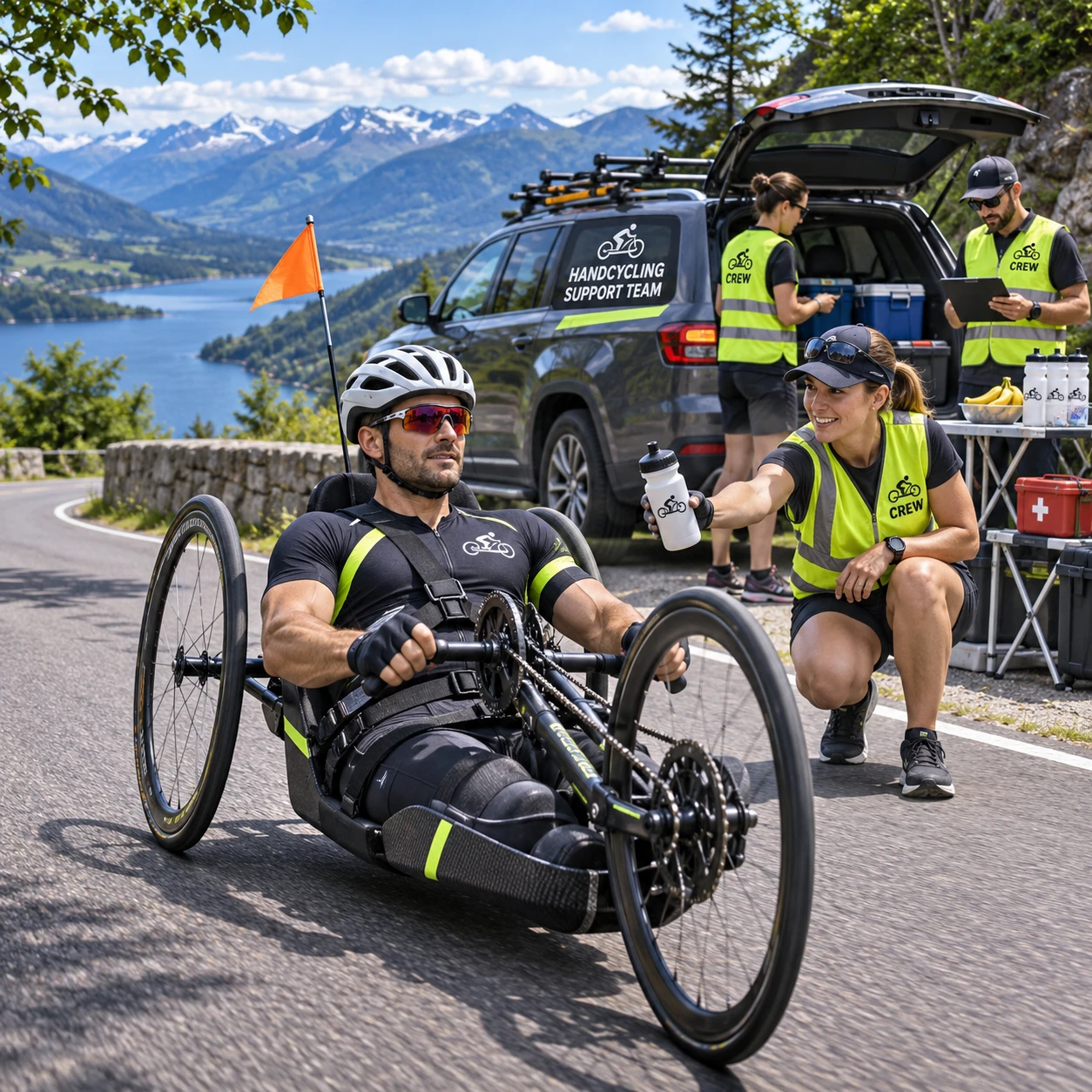
A dependable support team can make a handcycle expedition safer, more manageable, and more enjoyable. The right crew is not necessarily the biggest one: it is the group whose skills, routines, and support arrangements match the rider, route, and goals.
Start by agreeing on what the rider wants to do independently and where practical help is useful. That conversation will shape every decision, from crew roles and the support vehicle to accessible accommodation and emergency procedures.
Start with the expedition’s needs
Build the support plan around the expedition’s route, duration, terrain, and the rider’s preferences. A clear picture of the trip’s demands helps determine what the crew needs to do, and where the rider wants to remain self-sufficient.
Map the route day by day, noting distance, elevation, road conditions, weather exposure, traffic, mobile coverage, and places to stop. A remote mountain route may call for more vehicle coordination and contingency planning than a shorter trip through towns with frequent services. Include likely resupply points, accommodation options, and alternative routes if conditions change.
Then discuss the rider’s accessibility needs in practical, specific terms. Ask what assistance is wanted with transfers, personal care, food preparation, equipment handling, or setting up camp, and what should happen only when requested. Needs may vary by day, fatigue, pain, weather, or terrain. Avoid assuming that a diagnosis tells you what support someone wants.
Finally, agree on the expedition’s level of independence. The rider might want a crew nearby throughout the day, a vehicle leapfrogging between planned points, or support only at overnight stops. Each approach has trade-offs: closer support can simplify logistics but may reduce privacy or add vehicle costs. Make those choices deliberately.
Choose the right roles
A handcycle expedition support crew needs clear responsibility for coordination, transport, navigation, safety, and daily logistics. One person can cover several roles on a small trip, as long as the workload remains realistic.
The expedition leader keeps the overall plan moving, checks that decisions are understood, and coordinates changes. This person does not have to override the rider; agree in advance how leadership and route decisions work. Other useful roles include:
- Driver and vehicle coordinator: manages the support vehicle, parking, fuel or charging, and safe meeting points.
- Navigation and route lead: tracks the planned route, identifies alternatives, and checks road access and conditions.
- First-aid contact: knows the agreed emergency process, carries the appropriate supplies, and can communicate clearly if help is needed.
- Daily logistics lead: coordinates water and food resupply, accommodation, equipment checks, and the next day’s start.
These roles can overlap. For example, a two-person crew might share driving and logistics while the rider leads navigation. But avoid assigning one person so many time-sensitive duties that they cannot drive safely, communicate, and respond calmly at once. Role names matter less than knowing who is doing what.
Recruit for reliability and fit
Recruit support crew members for reliability, communication, availability, and teamwork, not just enthusiasm. Relevant experience helps, but a considerate person who follows through may be a better fit than someone with impressive credentials who dislikes shared decision-making.
Explain the real commitment before inviting someone: dates, expected hours, travel conditions, sleeping arrangements, costs, and the physical or emotional demands of the trip. Discuss how crew expenses will be handled, including fuel, meals, accommodation, and unexpected changes. Clarity now can prevent awkward disputes on the road.
Look for people who can stay flexible without treating every change as a crisis. A headwind, mechanical issue, closed road, or inaccessible room may alter the day’s plan. Ask candidates how they handle uncertainty and disagreements, and whether they are comfortable taking direction from the rider about access and assistance.
If possible, spend time together before departure. A day ride or overnight practice trip can reveal how people communicate when tired, how luggage fits in the vehicle, and whether the planned pace feels workable. Reliability is observable: notice who arrives prepared, shares updates, respects boundaries, and follows through on small tasks.
Agree on responsibilities and boundaries
Agree in advance who handles each task, who makes which decisions, and how the crew should offer assistance. Clear boundaries help the rider retain control while giving crew members a shared reference when plans get stressful.
Write down the basics: who can change the route, who contacts accommodation, who handles vehicle problems, and how the team will decide whether to continue, pause, or stop for the day. The rider should have a direct say in choices that affect their body, access, and expedition goals. If responsibility is shared, specify how the group will reach a decision and what happens if there is no agreement.
Talk about help in concrete language. Some riders may prefer to ask for assistance rather than have it offered repeatedly; others may want a check-in at specific points. Agree on what to do if the rider is quiet, tired, or focused on riding. Crew members should ask before handling the handcycle, mobility equipment, or personal belongings.
Set boundaries for privacy and downtime, too. Discuss photos and social media, personal care, and whether crew members are expected to be available after the riding day ends. A short written responsibility and boundaries plan is easier to revisit than assumptions made in a group chat.
Plan vehicles, supplies, and access needs
Plan the support vehicle, supplies, repairs, resupply, and accommodation around the handcycle and the rider’s access needs. Check that the arrangements work in practice, rather than relying on a booking description or a vehicle’s advertised capacity.
Confirm the vehicle can safely carry the handcycle, luggage, tools, and any mobility equipment without blocking access or creating unsafe loads. Check loading height, tie-down points, and where the vehicle can legally and safely stop along the route. If the team uses an electric vehicle, include charging locations and charging time in the daily schedule.
Build a practical daily inventory based on the route and weather. It may include water, food, weather layers, sun protection, navigation devices, repair tools and spare parts compatible with the handcycle, lights, and charged phones or batteries. Identify who checks supplies and when. For resupply, note opening hours and alternatives in case a shop or service is unavailable.
Call accommodation providers to confirm specific access details, such as step-free entry, doorway and bathroom arrangements, bed height, parking, and space for equipment. Ask direct questions and record the answers; the word “accessible” can mean different things from one property to another. Verified details beat assumptions, though even confirmed arrangements can change, so keep a backup option for important overnight stops.
Set communication and safety procedures
A communication plan should say when the rider and support crew check in, how they contact each other, and what to do if a message is missed. Pair routine updates with a clear backup method for poor signal, separation, or an unexpected delay.
Choose simple check-in points, such as the start, a planned rest stop, and the end of each riding day. Share the route, expected arrival window, and the next point of contact. Agree on what counts as a missed check-in and how long the crew should wait before trying another channel. Do not rely on mobile coverage where the route passes through remote areas; consider an appropriate alternative communication device if the risk and location call for one.
For emergencies, record local emergency numbers, key contacts, vehicle details, relevant access information, and the location of first-aid supplies. Agree who calls emergency services, who stays with the rider, and who manages the vehicle and other crew members. The plan should support prompt professional help, not encourage crew members to act beyond their training. Keep important information accessible offline as well as on phones.
Also plan for route changes and separation: choose meeting points, a safe place to wait, and a way to share a new location. A brief daily message confirming the route and timing can prevent a minor delay from becoming a confusing search. The specifics depend on local conditions, so make the plan fit the route rather than copying a generic checklist.
Brief and review the team
Hold a crew briefing before departure, practise the key routines, and review the plan during the expedition. A short rehearsal can expose gaps in communication, access arrangements, or equipment handling while there is still time to fix them.
At the briefing, walk through the route, roles, daily schedule, vehicle plan, resupply, accommodation, communication procedure, and emergency steps. Confirm everyone knows the rider’s preferences and how to ask before helping. Make sure each person can find the contact list, route information, and relevant equipment without relying on one crew member’s phone.
Use a practice run to test loading and securing the handcycle, check how the crew meets the rider on the road, and rehearse a routine change such as a delayed arrival or unavailable stop. Keep the practice realistic but manageable; the goal is to find friction, not to simulate every possible crisis.
Once underway, hold a brief check-in at a regular time. Ask what is working, what feels intrusive or unclear, and whether tomorrow’s plan needs adjusting. The rider’s needs and the route may shift, so treat the support plan as a working agreement. A crew that can listen, adapt, and communicate well is more useful than one with a perfect plan nobody feels able to change.
Frequently asked questions
Support team size and experience depend on the route, the rider’s preferences, and the jobs that must be covered. These answers can help turn the plan into a workable crew arrangement.
How many people should be on a handcycle expedition support team?
There is no single right number. A short, well-serviced route may suit a rider and one support person, while a remote or long expedition may require additional drivers or people to manage logistics and rest periods. Match crew size to the workload and make sure essential duties are covered without overstaffing the trip.
Do all team members need handcycling experience?
No. Handcycling experience can help with route awareness and equipment handling, but crew members can contribute through driving, planning, communication, or logistics. Anyone handling the handcycle should learn the rider’s instructions and practise the agreed procedures before departure.
What should a support vehicle carry?
Carry the handcycle-compatible repair items the rider and crew have identified, basic first-aid supplies, food and water, weather layers, navigation and charging equipment, and any agreed access or mobility equipment. The exact list depends on the route, vehicle capacity, and the rider’s needs.
How should the team prepare for an emergency?
Agree on who contacts emergency services, who stays with the rider, how the crew shares the location, and where essential information and supplies are kept. Check local emergency procedures and communication coverage before setting out, and keep the plan within the crew’s training and capabilities.
How can the rider make sure support respects their independence?
State what help is welcome, when to ask, and what the rider prefers to manage independently. Review those preferences with the crew before departure and revisit them during the trip. Asking first, respecting a no, and keeping decisions with the rider wherever agreed are practical ways to support independence.